




2026/08/15 Microsoft Cloud Solutions 174 visit(s) 3 min to read
ctelecoms
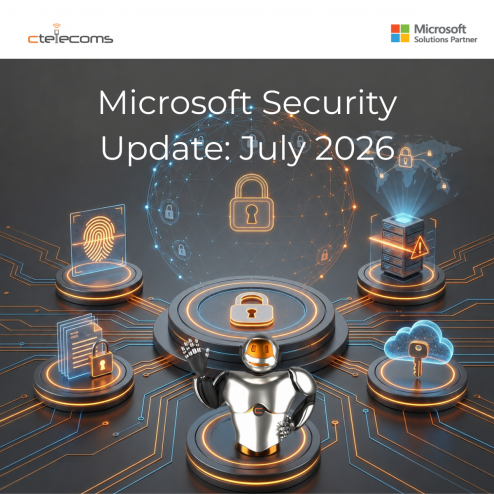
Cyber threats are moving faster than ever, and so is Microsoft. In its latest update for July 2026, Microsoft rolled out a wave of new security tools built around one simple idea: protection should work automatically, everywhere your business operates — from email inboxes to the cloud to every employee's laptop.
For companies across Saudi Arabia investing in digital transformation as part of Vision 2030, these updates matter. As more Saudi businesses move operations to the cloud and adopt AI tools, the risk of cyberattacks grows too. Here's a simple breakdown of what's new, and why it's worth paying attention to if you're running IT for a business in Riyadh, Jeddah, Dammam, or anywhere in the Kingdom.
Microsoft introduced a new system called Project Perception. Think of it as a team of AI helpers working together non-stop: one group tests your systems for weak spots, another watches for real threats, and a third fixes problems as soon as they're found. Instead of waiting for a person to notice something is wrong, this system catches and closes security gaps automatically.
For Saudi organizations dealing with a shortage of skilled cybersecurity staff, this kind of automated protection can be a real advantage — it means stronger defense without needing a bigger security team.
A lot of cyberattacks in Saudi Arabia and the wider Gulf region start with a single email. Microsoft's updated Defender tool now catches a newer, sneakier kind of attack: emails that try to trick AI tools (like Copilot) into leaking information or taking harmful actions. These dangerous emails are now blocked before they even land in the inbox.
Microsoft also added better protection for AI agents used inside companies — whether built on Microsoft's own AI platform or connected through other tools. This gives IT teams one clear view of every AI system running in the business, so nothing slips through unnoticed.
Passwords have always been the weakest link in cybersecurity. Microsoft is now making passkeys — a safer way to log in using your fingerprint, face, or device instead of a typed password — the default option in Microsoft Entra (Microsoft's identity and access tool).
This is especially useful for Saudi businesses working to meet data protection requirements under Saudi Arabia's Personal Data Protection Law (PDPL) and the National Cybersecurity Authority (NCA) framework, since weak passwords are one of the most common causes of data breaches.
Employees today share files and data constantly — over email, cloud apps, and increasingly, AI tools. Microsoft Purview now works together with Microsoft Entra to spot and block sensitive company data before it accidentally ends up in an unapproved app. For example, if an employee tries to upload confidential customer information into an AI tool that isn't approved by IT, the system stops it in real time.
This is a big deal for regulated industries in Saudi Arabia, like banking, insurance, healthcare, and government-linked organizations, where data leaks can mean serious fines and reputational damage.
When something suspicious happens, security teams need answers fast. Microsoft Purview's updated Insider Risk Management now uses AI to automatically study user activity, flag the most serious risks, and cut through the noise — so investigators spend less time digging and more time responding.
Starting July 2026, advanced device management features — previously an add-on — are now built into Microsoft 365 E5, with some features also available in E3. This means Saudi businesses already using Microsoft 365 get stronger control over company laptops, phones, and other devices without paying extra, including tools to limit admin access and manage software updates automatically.
Saudi Arabia is investing heavily in becoming a regional technology hub, and that growth brings more cyber risk along with it. Businesses that rely on outdated security setups are increasingly exposed to phishing attacks, data leaks, and AI-related threats that didn't exist a few years ago.
As a Microsoft Gold Partner, Ctelecoms helps organizations across Saudi Arabia and the Gulf put these exact tools to work — from identity protection and cloud security to data governance and AI risk management. Whether you're upgrading your current Microsoft licenses or building a security strategy from scratch, our team can help you apply these updates in a way that fits your business and keeps you aligned with Saudi cybersecurity regulations.
Want to know which of these updates apply to your business? Get in touch with Ctelecoms for a security assessment tailored to your organization.

Upgrade your IT to be as agile and efficient ...